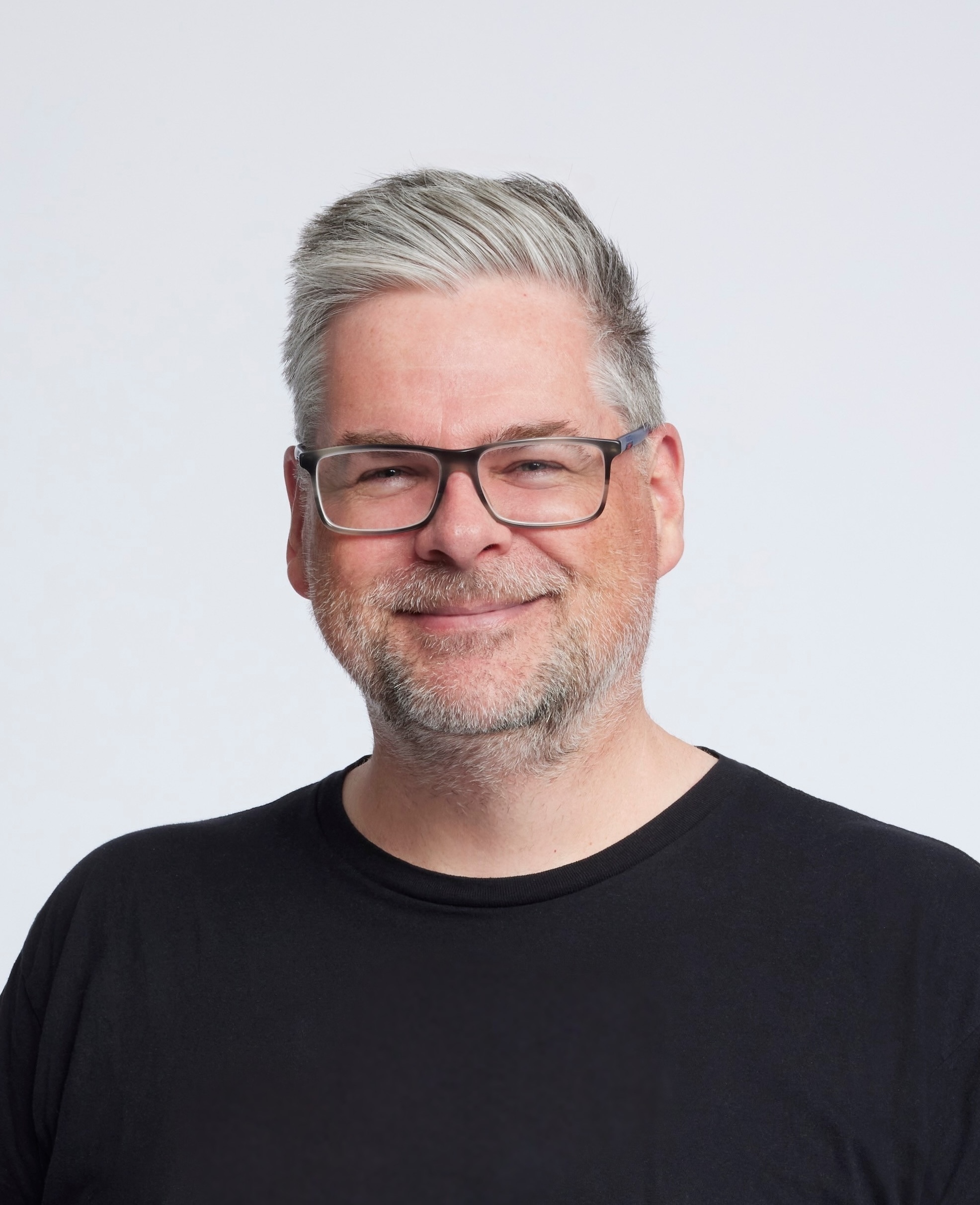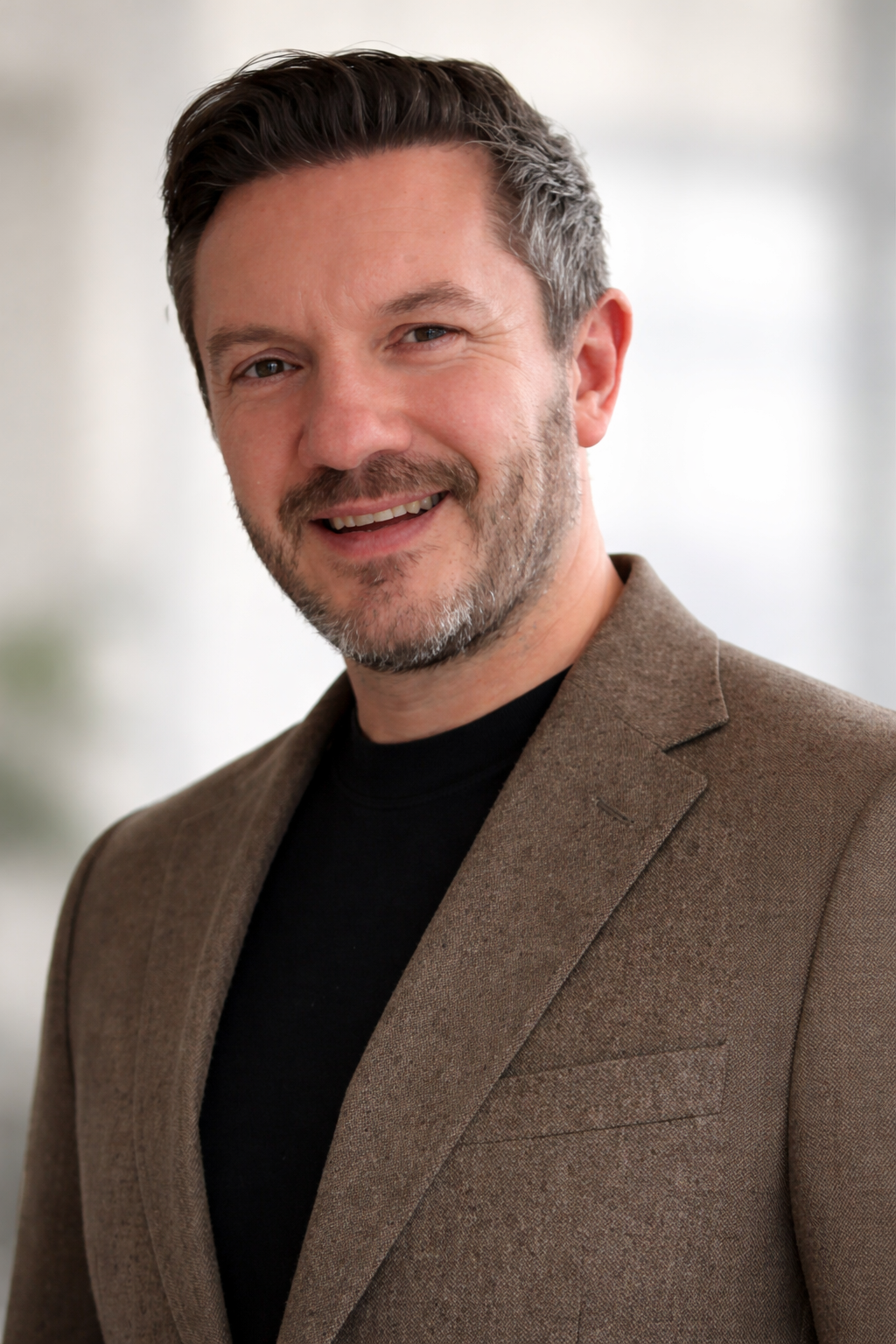
Gavin Wignall is the Senior Director and Head of Design Systems at Bentley Systems. He leads StrataKit, an open-source, accessible-first design system for data-dense environments, supporting a community of over 100 design professionals working alongside more than 2,000 engineers across a 200+ product ecosystem. A recognized voice in agentic design systems, he is actively shaping how AI tools and intelligent workflows are integrated into enterprise design practice.
Before Bentley, Gavin worked with Boston Consulting Group in AI and data science, an experience he now draws on as his team builds an agentic design system alongside it.
Gavin is a founding member of the Design Executive Council's Forum, the first cohort shaping the program from the inside. We sat down with him to talk about leading through the agentic shift, what changes when you stop doing it alone, and what he hopes the Forum becomes for the leaders who join next.
Introducing DXC's Forum Membership
Our new program, DXC Forum, is a new membership tier designed for Directors and early VPs: a curated peer network built to develop the next generation of senior design executives.
Built on DXC's virtual community platform, Forum enables members to engage with their peers and Council Mentors to pose and answer today's most pressing questions in design and experience management.
From defining career paths to developing leadership skills to navigating the rapid change driven by AI, DXC provides the network and knowledge base to drive our members' design leadership advancement.
1. Role and Focus
What is your current role, and what has been taking up most of your headspace this quarter?
I'm the Head of Design Systems, and that title covers a few different parts. We've been working on our own open-source design system, which has just launched. It's available to anyone, not just Bentley. It's carefully crafted to support accessibility and to focus on the challenges we have in the world of infrastructure. Those challenges align with any industry that deals with big, heavy data environments: complex products with a lot of detail, where users need to sift through the noise and make important decisions.
But the big thing in front of us, beyond reaching V1 and getting teams ready to adopt, is AI. The last six to twelve months especially have been an incredible journey in how technology has evolved. We've been careful to keep the train on the tracks in delivering the design system, while at the same time exploring what an agentic design system is and how it needs to work. How do we build an agentic design system? We now have that being tested and used in various teams.
That is changing everything. It's changing the way our teams work, how our function and our peer functions are coming closer together, and the speed we can work at. It comes with risks too: When people move that fast, they can skip steps or be led into a false sense of security that something is more ready than it is. But if you put the right guardrails and governance around it, you can get things in front of users quicker. You can do more research, more validation.
It's like the Spider-Man quote: with great power comes great responsibility. How do we roll this out in a way that does more good than harm? We're empowering people to do things they couldn't do before, but we also have to help them do it in a way that actually drives value and doesn't cause the wrong kind of disruption.
This pulls on my past experience with Boston Consulting Group in the world of AI and data science, so it feels like a special moment for me. I've been working closely with Issa Breibish, our Chief Design Officer, to understand what that world looks like when an agentic workforce works shoulder to shoulder with our human workforce. We're not looking to replace designers or cut the designer out. We want to free the team from getting bogged down in the automation parts, so they can focus on work with more quality and more impact.
"Yes, it's lowering the floor, but it's allowing the humans to raise the ceiling."
That's the most important part.
2. Joining the Forum
Before joining the Forum cohort, what about a peer community like this made it feel like the right move at this point in your career? And how does it complement the support you already have in your organization?
It came at a really valuable and relevant time for me, and a big part of that is the AI technology and the position we find ourselves in. But naturally, as you get more senior, there are fewer peers around you and fewer people to have that safe space with. I'm always careful to build those safe spaces and connections, but it's hard. You don't always have the right person at the right time, or someone who gets what you're trying to work through.
I say this to nearly everyone on my team and everyone who has worked with me: your network is your most important asset. When people move on, retain those relationships. I've had a number of people come back and work with me multiple times. Your network gives you reach into perspectives outside the work you're doing right now, so you can tap someone on the shoulder and say, I need a fresh set of eyes on my thinking here. Give me a gut check.
The Forum has given me an environment with people at a similar level to me, solving very similar problems in different industries, with different challenges. That's an amazing opportunity, especially with AI right now. Half the time we're all hoping we're taking a step in the right direction. There's no proven playbook for a lot of this. Sometimes you just need the confidence that you're not too far down the rabbit hole in the wrong direction. It's a chance to share ideas and feel like you're part of a movement, not on your own, but with people who share the same excitement and inspiration.
And at this moment in my career, support to understand how to get to the next level isn't something you can easily find. Having a community whose purpose is to help elevate you to that next level is exposure and training you just can't easily find.
3. From the Forum Back to Work
Now that you've experienced the Forum and joined our design systems fireside with Council members, has anything from the program found its way back into your work? Even something small, like a decision, a stakeholder pitch, or something you brought to your team?
There are a few key things. The first is what we've already touched on: the confidence that we're doing similar things to other companies at this moment in time. Knowing we're not pushing too fast, too soon, or in the wrong direction calms the nerves, settles the team, and it's something I can pass on.
Where I've been surprised is in the one-on-one connections. A fellow founding Forum member said something in one of our group chats that interested me, so we reached out afterwards, and now we regularly connect. The topic was the human factor of people working with AI. In the past, burnout was easy to spot. People were struggling, there was too much work, and things weren't getting done. Now burnout is appearing in new ways. People are too excited about AI and doing too much. They're not struggling to keep up; they're moving too fast. It's a completely different type of burnout, and harder to spot.
We talked about where we've already seen this in our teams, and what mechanisms we've tried to create an environment where people can talk about it without feeling vulnerable. At some point you've got to take a moment and slow down. It can't all be about speed.
4. Value from the executives
In the Forum, members are mentored directly by Council members who have led at that higher level. What has been helpful from what you've experienced so far, and how will it shape the way you approach things with your teams?
It's very different from the founding Forum conversations. Those tend to be with people at a very similar level who are solving the same problems, so you quickly go technical or start thinking about teams. In the executive pods, mentorship is much more focused on you as an individual and your leadership, and on thinking outside your usual way of thinking.
That's really refreshing, especially hearing it from a heavyweight who has a lot of experience and has held very high positions. From what I've seen so far, it's done in a very human, open, almost vulnerable way. I love that, because you've got to cut underneath the skin a little. What does it actually mean to be a leader? How do you survive in this particular part of your career? How do you do that from a business perspective while still being human? There are so many values and positions you have to weigh up and balance, and it's a really healthy part of the process.
Everyone has a slightly different flavor at that level. It's not a common role. The templates aren't there the way they are for a manager, and there are very different approaches you can take. Getting the time to hear those from a range of people is gold dust.
5. Advice for Fellow Design Leaders
To the design leaders who are leading through this moment like our members, what would you tell them about the value of not doing it alone?
The most important thing for any leader is to remember that we are all only human. We are vulnerable, and we need to find the right environments and the right people around us to support us. The more senior you get, the more challenging and lonely it can be.
It's very easy to fall into traps and behaviors if you don't have that network around you: people you can ask, "Do you have a moment? Could I run something by you? Could I hear your thoughts on this?" That's so important. The Forum offers that at a very senior level, which is not a place you can find easily.
For design leaders interested in joining the next Forum cohort, explore the premier membership network for design executives.