
How are design leaders articulating the value of design systems to business stakeholders?
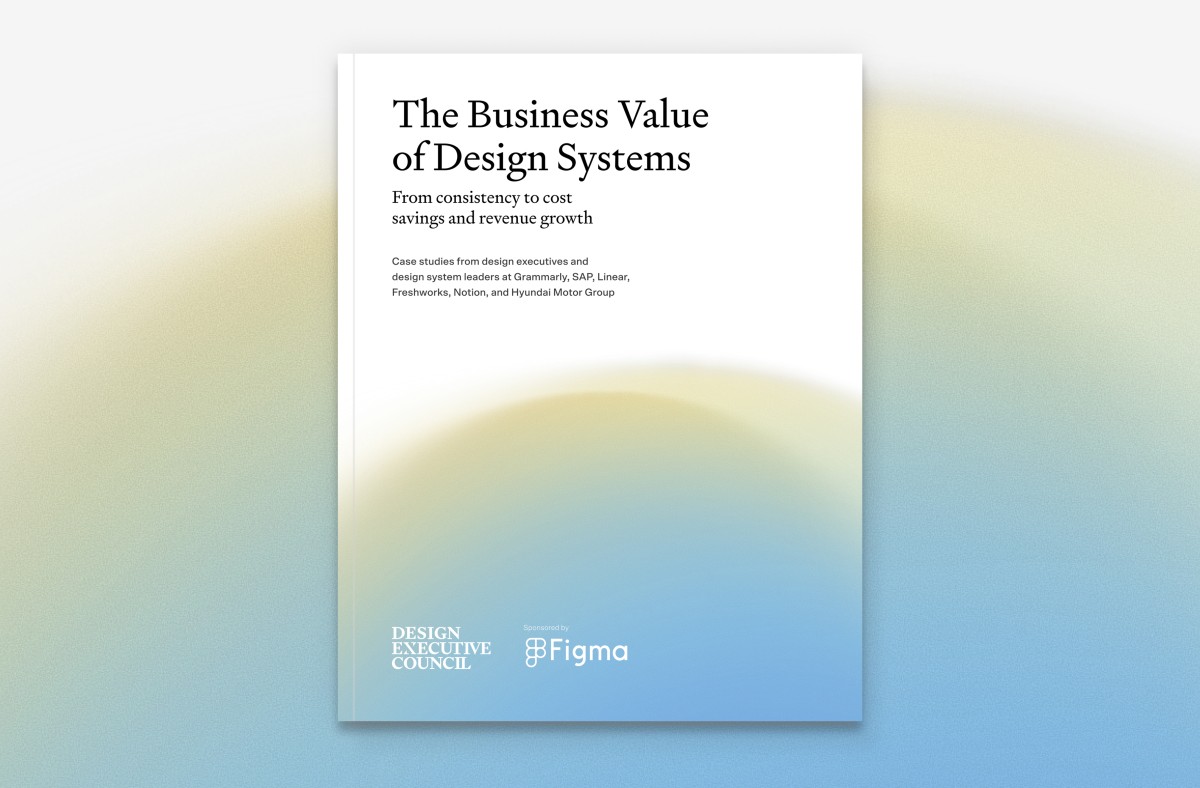
This report is a global study by DXC in partnership with Figma, revealing how design systems have evolved into business-critical infrastructure and are driving efficiency, scale, speed, revenue, and measurable impact across the world’s leading organizations.
In collaboration with Figma, DXC examined how design leaders at Grammarly, SAP, Linear, Freshworks, Notion, and Hyundai Motor Group are redefining the business case for design systems from tools of consistency to engines of growth. The report features in-depth case studies and interviews of these global design leaders including:
- Turning advocacy into enterprise-wide adoption and measurable ROI - Rebecca McMillin, Director of Product Design, Foundations and Collin Whitehead, VP of Design at Grammarly
- Elevating design systems to board-level KPIs for growth - Arin Bhowmick, Chief Design Officer at SAP
- Building quality-first systems that drive retention and brand advocacy - Conor Muirhead, Head of Product Design and Yann-Edern Gillet, Product Designer at Linear
- Using a design-led “Uncomplicated Movement” to unify global experiences - Kedar Shiroor, SVP of User Experience and Senthil Shanmugam, Sr. Director of Product Design at Freshworks
- Designing for adaptability and scale through craft and code - Randy Hunt, Head of Design at Notion
- Transforming manufacturing through software-defined mobility - Eric Wood, SVP of Product Experience and Chris Jacobs, Principal Product Designer at 42dot (Hyundai Motor Group)
Design systems are no longer just libraries of reusable components. They’re the connective tissue between design, engineering, and product teams. They reduce operational friction, legal risk, and enable companies to scale experiences cohesively across products, platforms and markets.
Key insights from the report:
- Design systems have become enterprise infrastructure, aligning design, engineering, and product functions while reducing operational friction and strengthening brand integrity.
- Design systems help teams to improve efficiency and margins, eliminating duplication, reducing support costs, and accelerating production cycles.
- Design systems drive revenue growth by enabling faster time-to-market, more cohesive product ecosystems, higher user satisfaction, and improved retention.
- AI is amplifying the value of design systems by relying on structured, reusable foundations to deliver compliant, scalable, and adaptive experiences.
- Enterprises with mature design systems are better positioned for AI readiness, using systems-driven governance, clarity, and consistency to manage complexity and support resilient, intelligent product development at scale.
About the report
The Business Value of Design Systems is a landmark study on how design systems have evolved into essential business infrastructure for modern organizations. Conducted by the DXC in partnership with Figma, the report examines how leading companies are leveraging design systems to eliminate operational friction, enhance brand consistency, and accelerate delivery at scale.
Whether you’re establishing your first design system or scaling an enterprise-grade platform, this report offers actionable insights, frameworks, and case studies to help you communicate the ROI of design systems and their strategic importance in the AI-driven era.