%20Option%202.jpg)
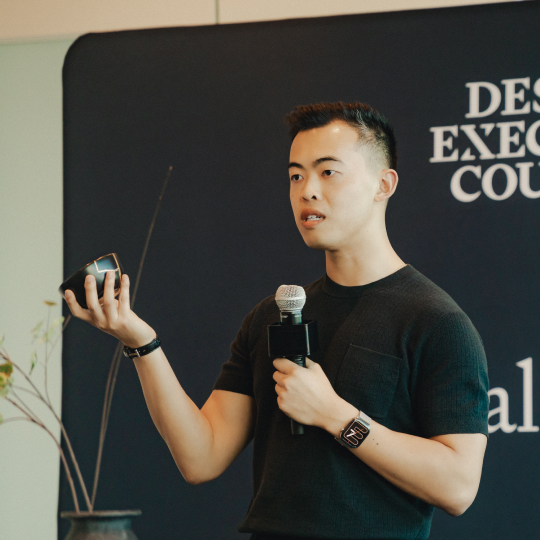
Anish Bhimani is Head of Lending Products for Global Banking at JPMorgan Chase. Over two decades at the firm, he has held a range of roles, including Chief Information Officer and Chief Product Officer for Global Banking. He also serves as a Member of the Board of Governors at Brown University’s School of Engineering.
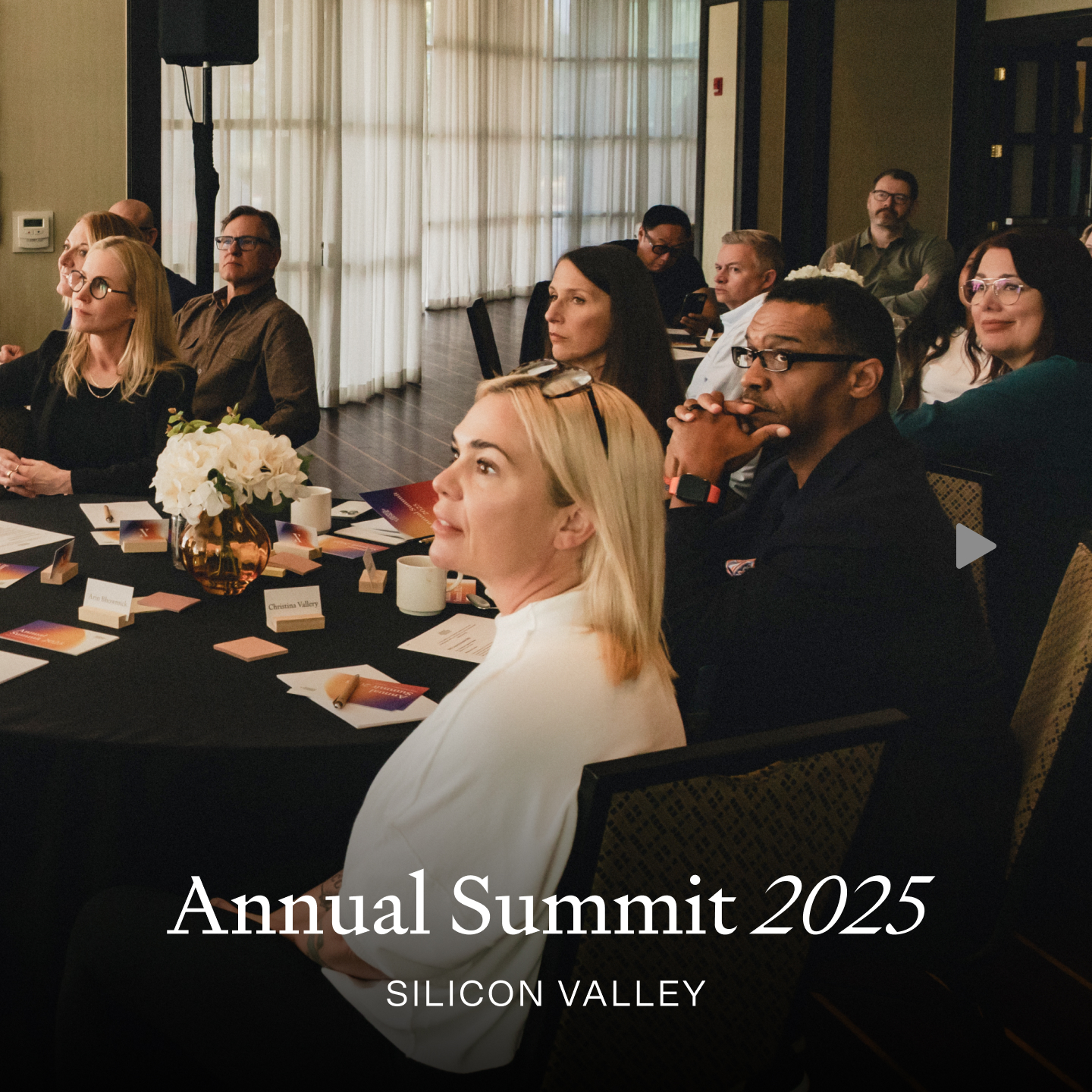
He has a depth of experience working closely with Council Member Janaki Kumar, Head of Design for Global Banking. At a recent Design Executive Council roundtable on Navigating Product Development in the AI Era, Janaki partnered with me to co-host a conversation with Anish to hear his strategic leadership perspectives on how to lead business, cultural and product transformation with AI in the process.
His throughline: customer-centricity is not a value statement. It is the operating discipline that governs everything else — what to build, how to organize, when to ship, and when to stop.
We asked Anish to share how he thinks about leadership with AI inside a large enterprise, bundled into 5 key perspectives to guide leadership for the AI economy.
1. Solve for the Client First — Efficiency Will Follow
The most common mistake enterprises make in AI transformation is beginning with the wrong question. Most start with capability and work backward toward the customer. Anish runs this logic in the opposite direction.
"You always, always, always solve for client experience first. Because if you solve for operational efficiency, you'll get a horrible customer experience. But if you solve for client experience, you'll get operational efficiency."
This is not a soft principle. It is a causal claim. Efficiency, in his framework, is a byproduct of customer-centricity rather than a parallel objective. Organizations that pursue both simultaneously tend to default toward what is most legible in the near term: cost lines, headcount, token spend. The thing that actually compounds over time, the quality of the experience itself, gets treated as secondary. At a moment when boards are interrogating their CTOs on AI ROI and some enterprises have burned through annual software budgets in under four months, this reframe matters. Start with the client. Efficiency follows.
2. Build around journeys not components
A common trap in product development is assuming you’re shipping a cohesive product when you’re really shipping the byproduct of how work is divided internally. It’s easy to build great individual features and still deliver a fragmented experience. Customers don’t experience products as a set of components—they experience them as a journey with an intended outcome.
The practical shift is to design and measure around end-to-end flows and ensure every team contribution ladders up to a consistent experience.
3. Apply Discipline as a Design Principle
In a room energized by what AI makes newly possible, Anish offered a deliberately countercultural perspective.
"Just because you can do something doesn't necessarily mean you should. You want to serve customers the way they want to be served, not the way you want to serve them."
This is not hesitation. It is a disciplined execution. There is a real difference between the executive who slows down out of risk aversion and the one who applies discipline as a deliberate strategic design principle. It is the leader who asks should we? before can we? Anish established the importance of this decision-making reflex.
The AI capability frontier is expanding faster than most organizations can govern it. The temptation for product and engineering teams is to ship because the capability exists, to automate because the automation is available, to add because the model supports it. Anish redirects that energy toward a more fundamental question: does building this actually serve the client in the way the client wants to be served?
4. Encode Quality Standards Before Speed Gets Out of Control
With AI, you can either scale chaos, or coherence. Anish established the importance of an architecture of quality to ensure teams scale the right things.
As AI coding tools proliferate and vibe coding becomes part of the standard product development workflow, the risk is not that teams will build too slowly. The risk is that they will build quickly and wrong, at a scale that becomes structurally difficult to unwind. The design system embedded as a machine-readable constraint in the context window, rather than enforced by a human reviewer downstream, is the architectural answer to that problem. Quality is not governed through inspection after the fact. It is encoded into the system so that compliant output becomes the path of least resistance.
5. Stitch AI Into the Client Experience — Don't Retrofit the Client Into an AI Strategy
When asked how he thinks about AI-first strategy, Anish reframed the question entirely.
"I don't think through an AI-first or agentic-first mindset. I think through a client-first mindset. And we stitch together where agentic fits across our clients' experiences."
The word stitch is deliberate. It implies a careful threading of capability into the specific moments where it genuinely serves the client, not a blanket deployment across workflows because the technology exists to do so. Technology is the thread. The client journey is the fabric.
This distinction shapes how organizations budget, prioritize, and evaluate AI investment. If the question is where does agentic AI fit in our technology roadmap, you get one set of decisions. If the question is where does the client experience break down and what is the right tool to address it, you get better ones. AI earns its place rather than being assigned one.
Anish's closing thought brought all five principles back to their foundation: "AI is not going to replace people. People who use AI are going to replace people who don't. So lean in, and always put the customer at the center of what you do."
There is no compression algorithm for experience. A successful AI strategy is client-centric from start to finish.
--
Anish Bhimani joined us at a Design Executive Council’s Q2 roundtable on AI and the Product Development Lifecycle, convened for Chief Experience and Design Officers navigating AI transformation inside Fortune 1000 enterprises as part of the Design Executive Council membership program.