
The past year was defined by rapid experimentation with AI tools. Today, enterprise leaders face a new challenge: AI infrastructure costs are hitting the balance sheets, boards are demanding quantifiable ROI, and organizations must pivot from speculative testing to embedded architecture.
Against this backdrop, the Design Executive Council convened senior experience and design executives at Figma’s Config 2026. The goal was to create a candid space for peer intelligence, focused on a singular question: What is the next frontier of design and research leadership?
Our conversations focused on three critical pillars defining the next phase of enterprise technology:
- Driving Measurable Business Impact: Moving AI past the novelty phase to defined and verifiable bottom-line value.
- Scaling Customer-Centricity: Building robust operational frameworks that keep the business and user context at the center, even as development scales exponentially.
- Accelerating Enterprise Velocity: Implementing modern experience management capabilities to ship high-integrity products faster.
Event agenda
Wednesday, June 24: Executive Breakfast
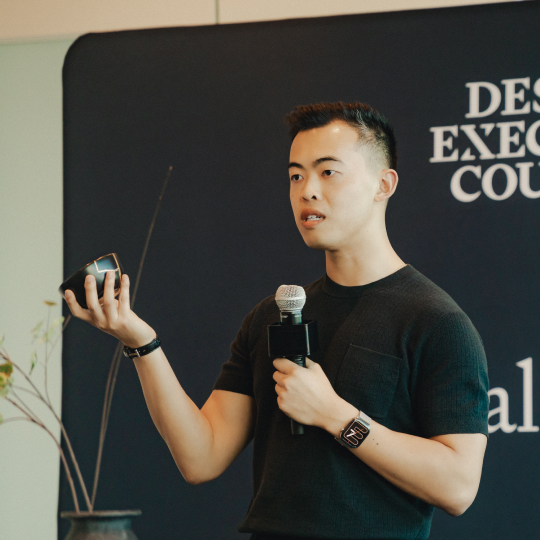
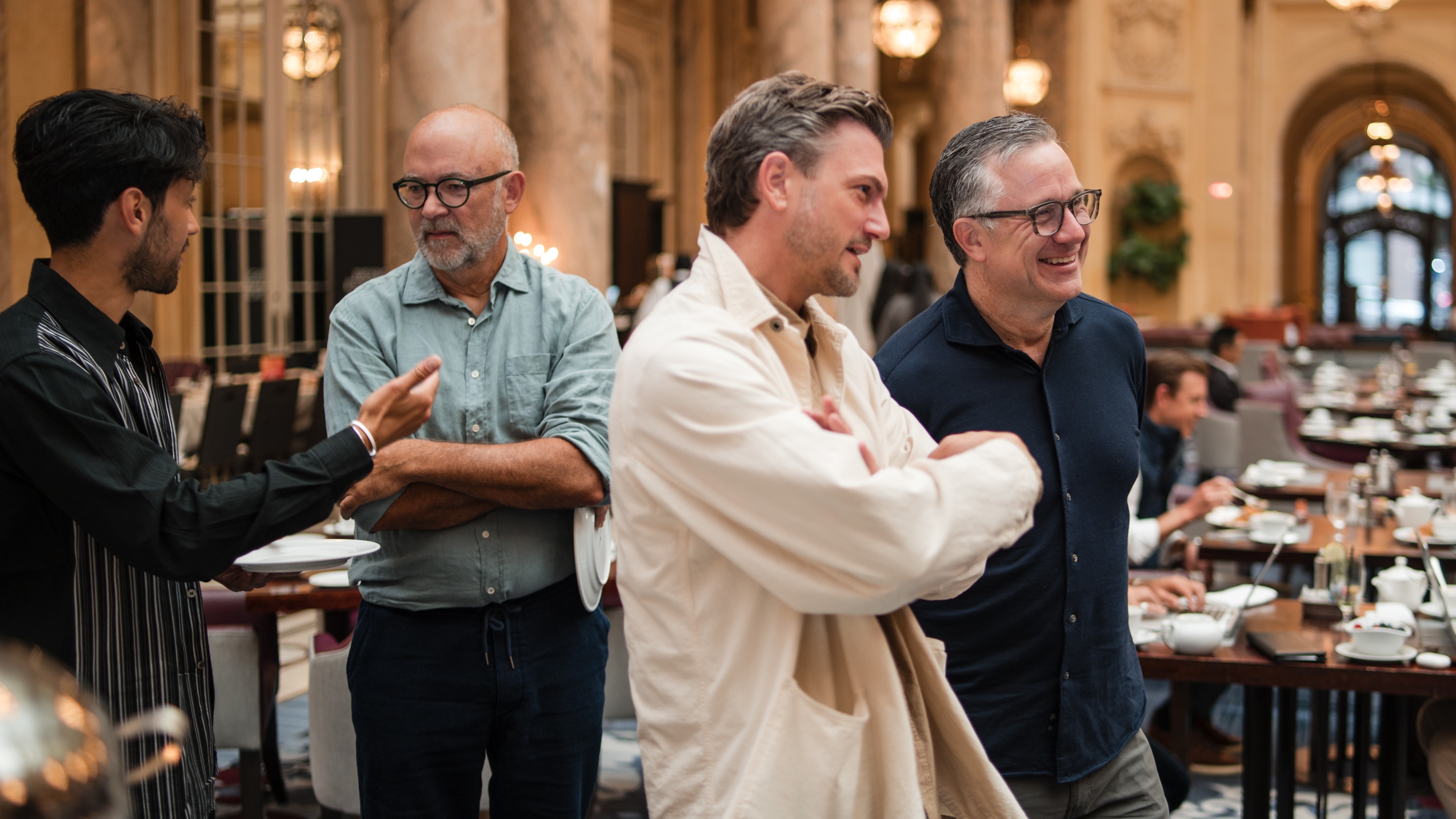
Design Executive Council opened Config week with a private breakfast at the historic Garden Court at the Palace Hotel—a members-first moment before the broader conference began. Gordon Ching, CEO of the Design Executive Council, set the tone with opening remarks on the landscape ahead.
Around the table, senior design leaders engaged in candid peer conversation, the kind that defines DXC gatherings. The discussion centered on: How are our roles and organizations navigating in the face of AI, speed, and evolving market expectations?

Attendees:
- Andrew Ackermann, VP of Product Design at Mercury
- Andy Vitale, VP, Head of Product Design & AI at Taxwell
- Arin Bhowmick, EVP, Chief Design Officer at SAP
- Belén Tello, Head of Design at Banco de Crédito (BCP)
- Patricia Wissar, VP of Digital Channels & Transformation Capabilities at Banco de Credito del Perú
- Blair Ellis, VP of Design at Flex
- Christian Rohrer, VP of Experience Design at TD Bank Group
- Christina Vallery, Chief Design Officer at The Cigna Group
- Kylie Tsering, Sr. Director Enterprise Design Platform at The Cigna Group/Evernorth
- Catherine Walker, Head of Content The Cigna Group
- Cindy Chastain, Fmr. SVP of Customer Experience and Design at Mastercard
- Clasonda Armstrong-Grandison, Director of Design at Alaska Air Group
- Dom Propati, Global Head of Design at Clover
- Klaus Heesch, Head of Design, Financial Institutions Group at Fiserv
- Greg Petroff, Fmr. Chief Design Officer at Cisco Secure
- Issa Breibish, Chief Design Officer at Bentley Systems
- Jean-Baptiste Kaloya, VP of Product Design and Research at Bpifrance
- Julie Mathers, VP, Head of User Experience at Workiva
- Janaki Kumar, MD, Chief Design Officer, Global Banking at JPMorgan Chase
- John Kilpatrick, VP of Product Design at Chime
- Mary Piontkowski, VP of Product Design at Cisco Networking
- Jojo Yang, Head of Enterprise Design Systems at Cisco Systems
- Neil Epstein, Director of UX at Cisco Meraki
- Kaaren Hanson, VP of User Experience at Insulet Corporation
- Nastasha Tan, VP, Head of Design at Rocket
- Emily Strobl, Director of Product Design at Rocket
- Rory Hart, Head of Design at Yahoo Finance
- Regina Geltosky, Director of Experience Design Studio, Innovation at Nike
Wednesday, June 24: Industry Panels
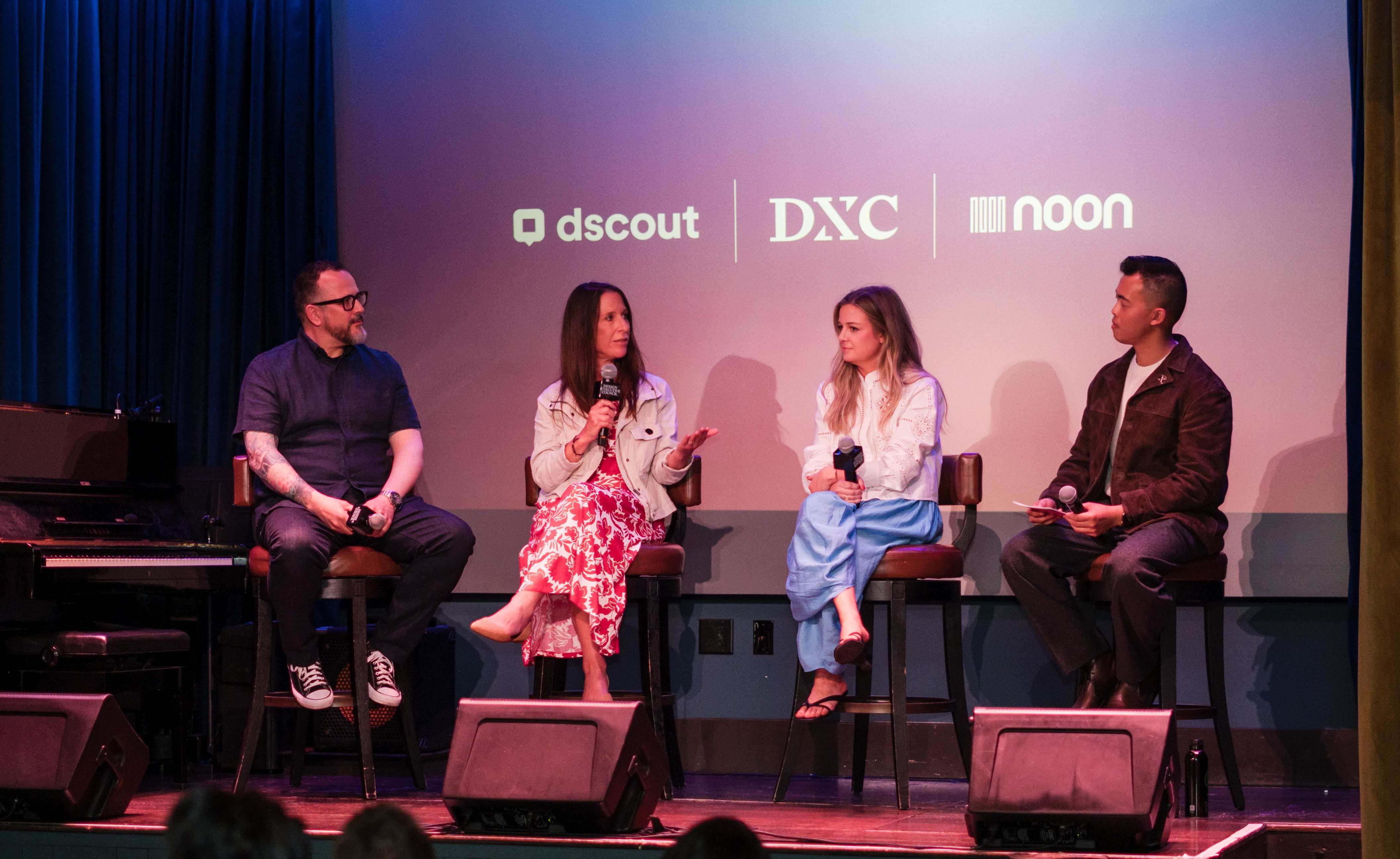
That evening, DXC convened an invitation-only gathering at San Francisco's Dawn Club. In partnership with Dscout and Noon, the program brought together senior design executives and product leaders for two lightning panels and an open mixer—all oriented around: As AI-driven engineering velocity reshapes product development, how will design and research avoid becoming a bottleneck, and towards becoming amplifiers and authors of what comes next?
Panel 1: The Future of Research
The opening panel unpacked: How does research evolve to drive value when engineering velocity is accelerating beyond research's ability to keep pace?
The Tension: Research structured as episodic studies can't move at the speed of modern product development. By the time a research project concludes, the market has shifted. Yet customer understanding isn't less important in a fast-moving environment, it's more important. The gap is structural.
The Shift: One panelist reframed it: "product market fit" is evolving into "product market flow", continuous signal-picking instead of point-in-time validation. Under episodic models, researchers answer questions the organization already knows to ask. Under continuous models enabled by AI, researchers reframe what the organization should be paying attention to. That moves researcher from respondent to strategist—and unlocks the ability to lead the business instead of validating it.
Panel 2: The Future of Design
The second panel explored question: What does it mean to be a designer when the lines between design, engineering, and strategy are dissolving?
The Tension: If anyone can now use the tools to build artifacts, what is the distinct role of a designer? Speed is only one part of the equation. Customer value, quality, trust and coherence are all broader tension points that designers are navigating towards helping organizations to build products better at scale.
The Shift: One panelist said: "UX and design was never accountable for outcomes. But in this day and age, that's got to stop. We've got to step up as product leaders in different ways." Designers can no longer hand off work. They're accountable for what ships. That requires technical fluency, systems thinking, and the ability to own outcomes across the full product lifecycle.


DXC thanks both partners and all panelists for contributing their enterprise perspectives and candor to an evening of industry dialogue.
Thursday, June 25: After Party
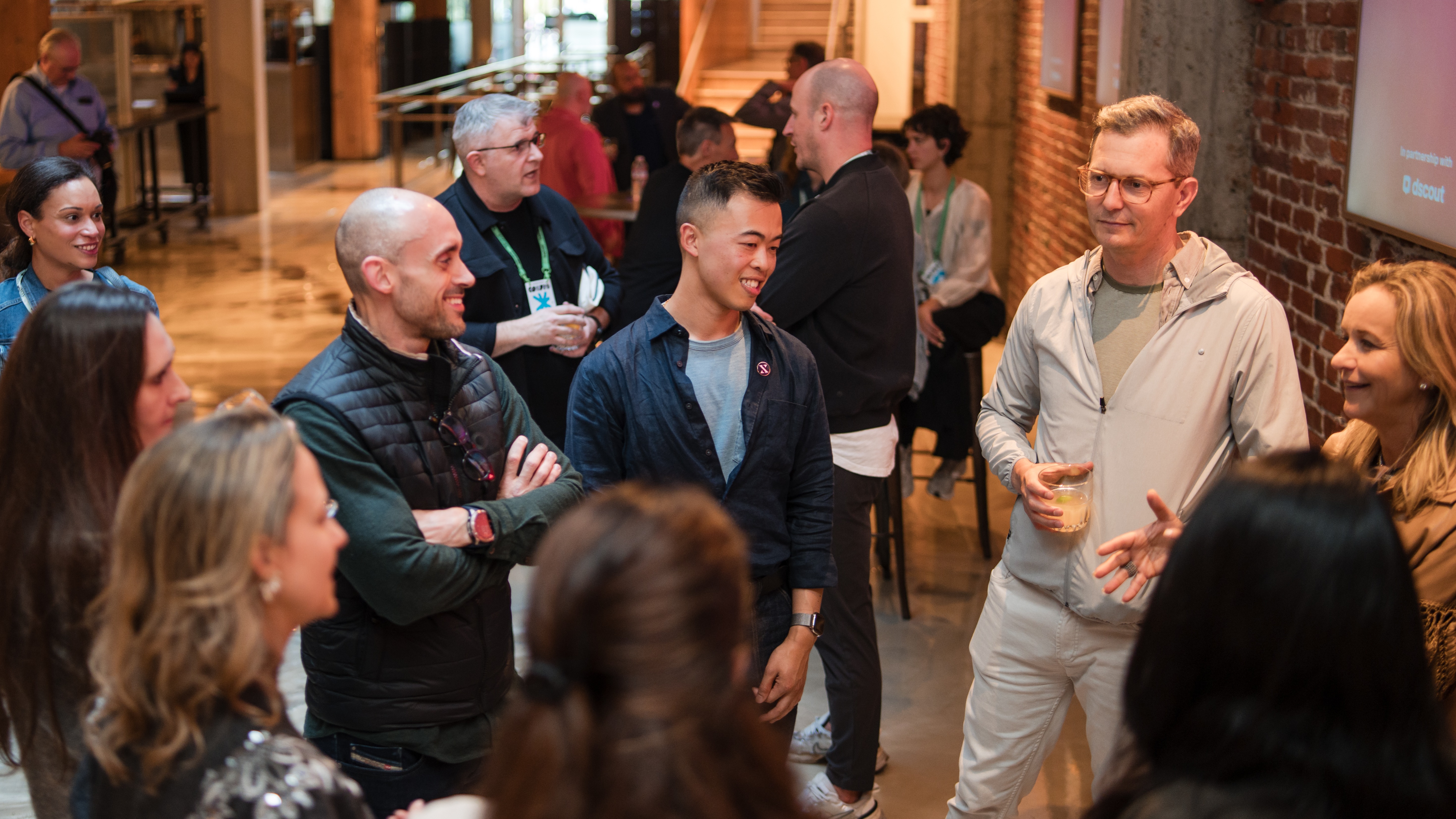
DXC closed Config week with an invitation-only reception in partnership with Dscout, designed for deeper relationship building among members, partners, and guests. Intentionally relaxed and conversational, the evening offered an opportunity to continue discussions sparked throughout the week in a more social setting.

What emerged
Three days of conversations revealed how design and research leaders are transforming how they work.
- Real business impact with AI doesn't come from automating everything. It comes from being deliberate about where AI accelerates human insight. At the frontier, research is becoming always-on intelligence. Design is becoming full-stack ownership.
- Customer-centric practices don't scale with handoffs. They scale when researchers develop prototyping fluency, designers develop technical fluency, and everyone owns the outcome.
- Experience management capabilities require new models. The old episodic research, design specs handed off to engineering, and static design systems are artifacts of a slower era. The future is different: continuous research, designer-engineer collaboration, self-optimizing systems.
The shift from experimentation to strategic choice isn't about doing more with less. It's about doing the right things with clarity. And that clarity comes from peer intelligence from leaders willing to be candid about what's working, what's breaking, and what needs to change.
This recap captured what surfaced across three days at Config 2026. Two companion pieces go deeper into the Industry Panel conversations that anchored the week.
- On the research side, Raising the ceiling: Researchers are becoming agentic context builders that empower better decisions traces how the researcher's role is shifting from doing synthesis to shaping what synthesis means, and how research teams are moving from episodic studies to always-on programs.
- On the design side, Raising the ceiling: Designers are stepping past contribution into end-to-end ownership of what ships examines how the collapse of handoffs is redistributing accountability, and what end-to-end ownership asks of design leaders as AI economics enter the P&L.
%20Option%202.jpg)