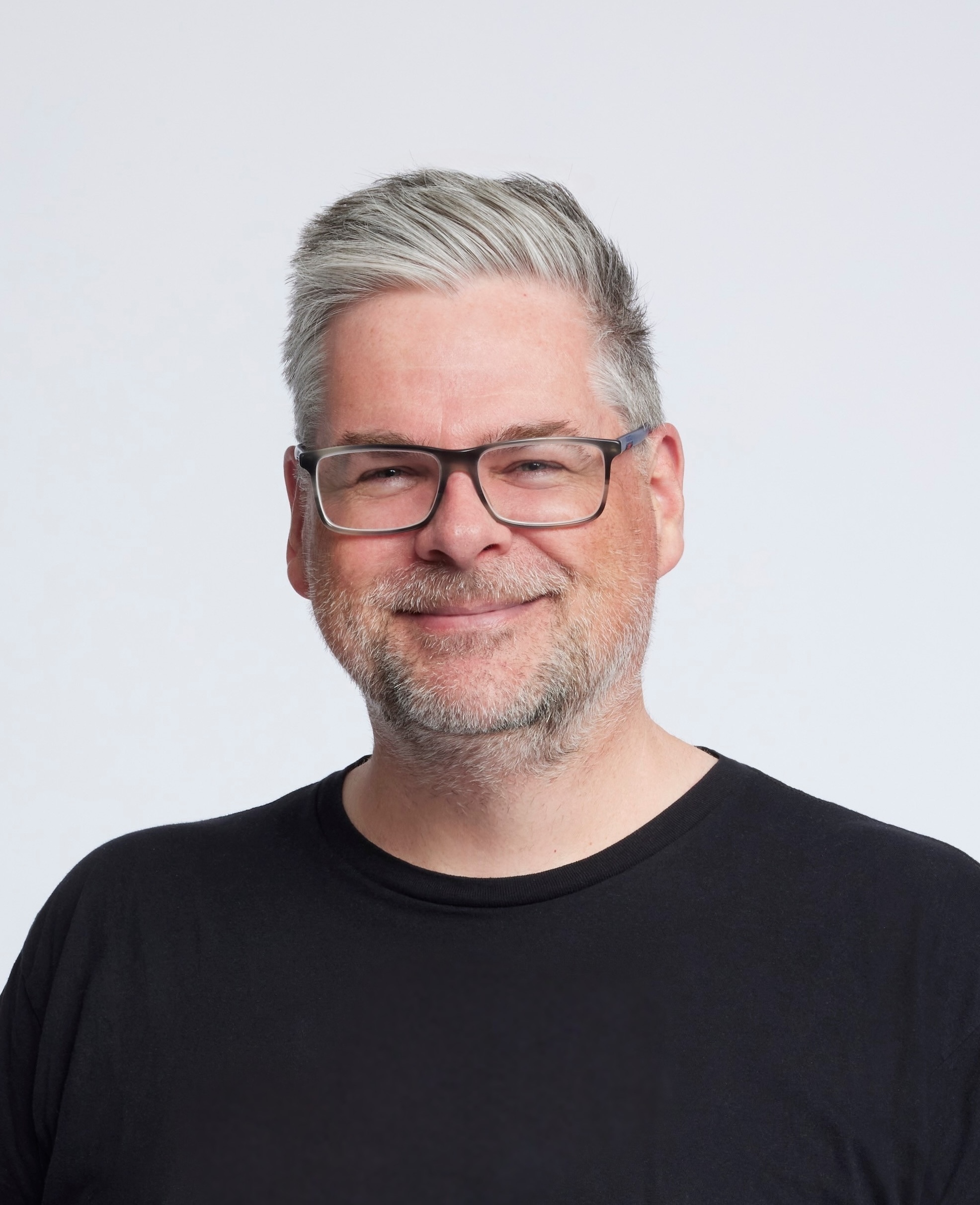
Becky Sherman is Director of User Experience at American Airlines, where she has worked for about eight years. Her purview covers around 140 applications spanning the customer-facing and employee-facing sides of the American Airlines digital ecosystem.
Becky is a founding member of the Design Executive Council's Forum. We sat down with her to talk about bringing AI into how her teams work, why she wanted a sounding board beyond her own organization, and what the first three months of the Forum have brought back to her work.
Introducing DXC's Forum Membership
Our new program, DXC Forum, is a new membership tier designed for Directors and early VPs: a curated peer network built to develop the next generation of senior design executives.
Built on DXC's virtual community platform, Forum enables members to engage with their peers and Council Mentors to pose and answer today's most pressing questions in design and experience management.
From defining career paths to developing leadership skills to navigating the rapid change driven by AI, DXC provides the network and knowledge base to drive our members' design leadership advancement.
1. Role and Focus
To start, tell me a bit about your role right now and what's taking up most of your headspace this quarter.
I'm Director of User Experience at American Airlines, and I've been with American for about eight years. What's in my purview, and what I care about, are around 140 applications that cover customer-facing and employee-facing aspects inside the American Airlines digital ecosystem.
My current challenges, like a lot of people, are around AI. How do I take AI and embed it into my processes? How should my processes change?
One of the things I'm seeing a lot right now, both in what I read online and in my experience at American, is experiments we call velocity labs. You take a UXer, an engineer, and a product owner; you put them in a room, you sequester them, you focus them, and you give them AI enablement. And they take a very small slice to a production environment.
It's successful in the sense that you're taking something to a production environment much, much faster. But there are two things I'm seeing, and I want sounding boards on how people are handling them. One is: where does research go when you're doing things in a matter of days?
The other thing on my mind is that a lot of my designers are single-threaded. People are talking about AI orchestrators, where you have more agents doing things. Is there a world we're going to live in where there's a design agent? And how would it work on a team? I juxtapose that with our engineers. A squad of six engineers is already experimenting with three humans and the rest agents. What does that look like for the UX world, when I'm already single-threaded?
"I don't have a construct of a squad; I'm already just one human, in many cases."
2. Joining the Forum
What made a peer community such as this feel like the right move at that point in your career? And how did you see a community like this complementing the support you already had around you?
One of the things about UX is that it's still a relatively new profession. It's been around for about 30 or 40 years, and I feel like it's starting to mature at the leadership level, where there's enough critical mass of leadership starting to make its way all the way to the C-suite. So you're seeing more and more of these leadership communities start to take off.
It gets lonely at the top, and you want someone to talk to. I'm the only person like me at American Airlines, so I don't have a peer I can use as a sounding board for the different challenges I face as a design leader.
So being able to have that outward perspective, being able to have that community, matters. We all want to know: Are we moving things in the right direction? Have other people already learned how to do this? Am I ahead of something? Am I behind on something? Am I in the right place? I think it's just a great way to connect and make sure that you positively drive your organization.
3. From the Forum Back to Work
Has anything from the Forum found its way back into your work, even something small? For example, a decision, a conversation with your team, or the way you framed something to a stakeholder.
One was very tangible. A fellow Forum member and I had a one-on-one conversation about design maturity, because I was interested in how he was measuring it. We exchanged ideas, he gave me some of his frameworks, and I've shared those with my DesignOps team. I think design maturity is interesting from a measurement perspective: how do you measure this thing called maturity, and why is it important?
The other is the agentic design system session. We wrote a business case for our design system, taking that agentic approach, and there were some ideas from the session that I tried to influence through the business case we were writing for that effort.
4. Mentorship
In the Forum, you're mentored directly by a Council member alongside your pod. What has been valuable about the mentorship, and what is the value of having a mentor at a time like now?
I feel like I'm lucky, because our mentor seems to be further ahead on the AI curve. He's leading the charge at his company, and I find that very helpful given where we are right now in our careers, because AI is prevalent across the digital space.
Then there are the people coming to the table. I can hear that we're on different journeys. Some people's companies aren't giving them access to some of the technology and aren't asking the same things of them. Being able to see that spectrum means you don't feel like, oh my God, I'm really far behind, or I'm really far ahead. It's nice to see that different people are in different places.
There's also a variety of different kinds of companies. One member works for a startup, and that's a very different proposition than working for American Airlines. Being able to understand the different points of view is great.
5. Advice for Fellow Design Leaders
What would you tell a fellow design leader about leading through this moment, and the value of not doing it alone?
I feel like it's an opportunity to continue to develop yourself and understand: what is your brand of leadership? What is your leadership style? You're going to be around professionals who are in the same spirit that you are, and you get to make some choices about what your leadership journey is.
One of the things I like is that our pod has different industries and different sizes of companies. You also have different roles: there's somebody who leads up the design system, and another who is in marketing. I like the diversity. It's a good opportunity to hear a lot of different voices and gain different perspectives, to help you shape how you want to drive your organization, or how you want to shape your career.
For design leaders interested in joining the next Forum cohort, explore the premier membership network for design executives.