
This is Part 1 of a two-part series on the DXC Industry Panels at Config 2026. Read Part 2 on the future of design.
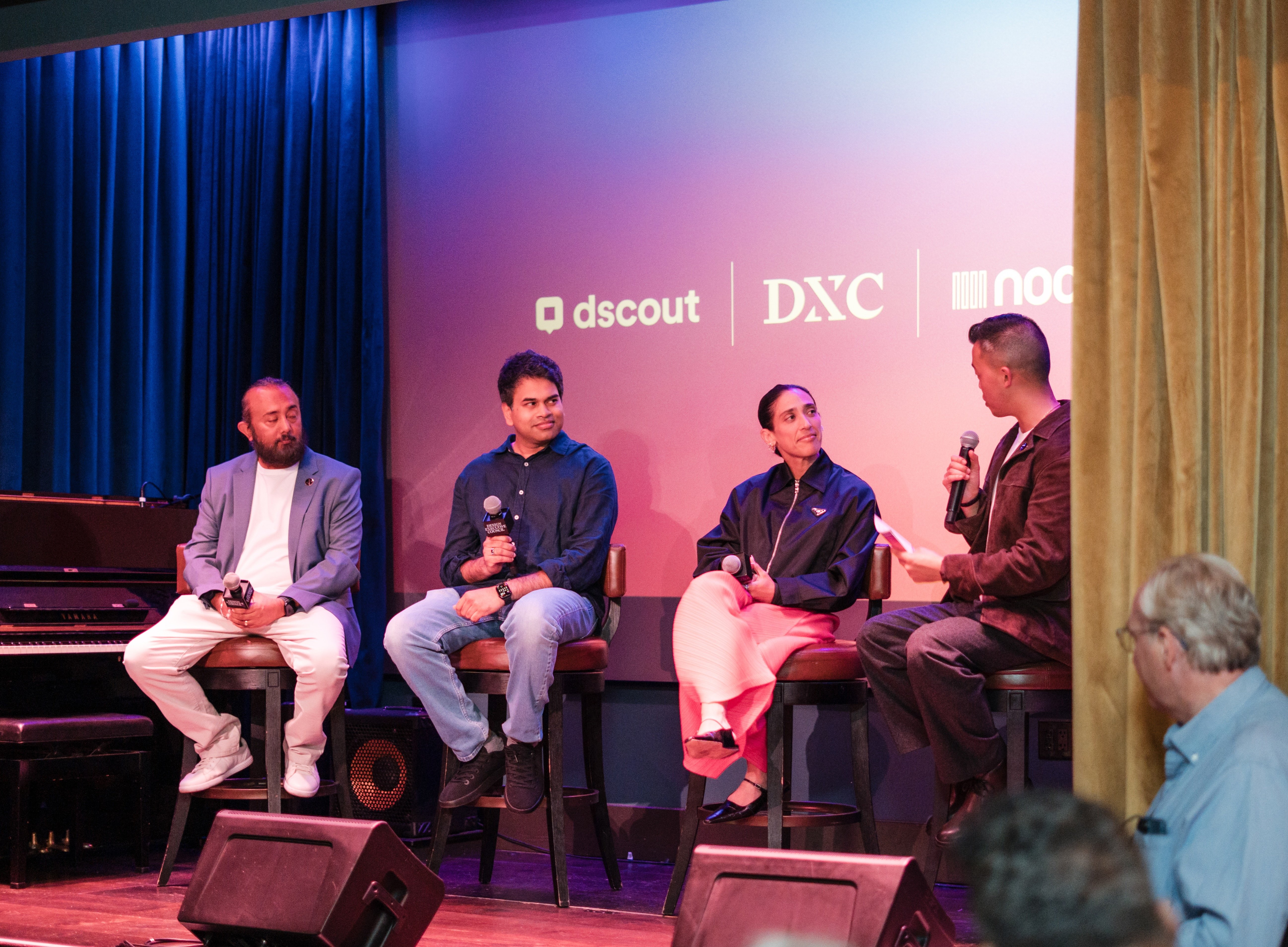
Following a day of major Config announcements on June 24, 2026, we convened senior design and research leaders for an invitation-only evening of industry panels and dialogue. This event was hosted in partnership with Dscout and Noon, who brought the toolmakers perspective.


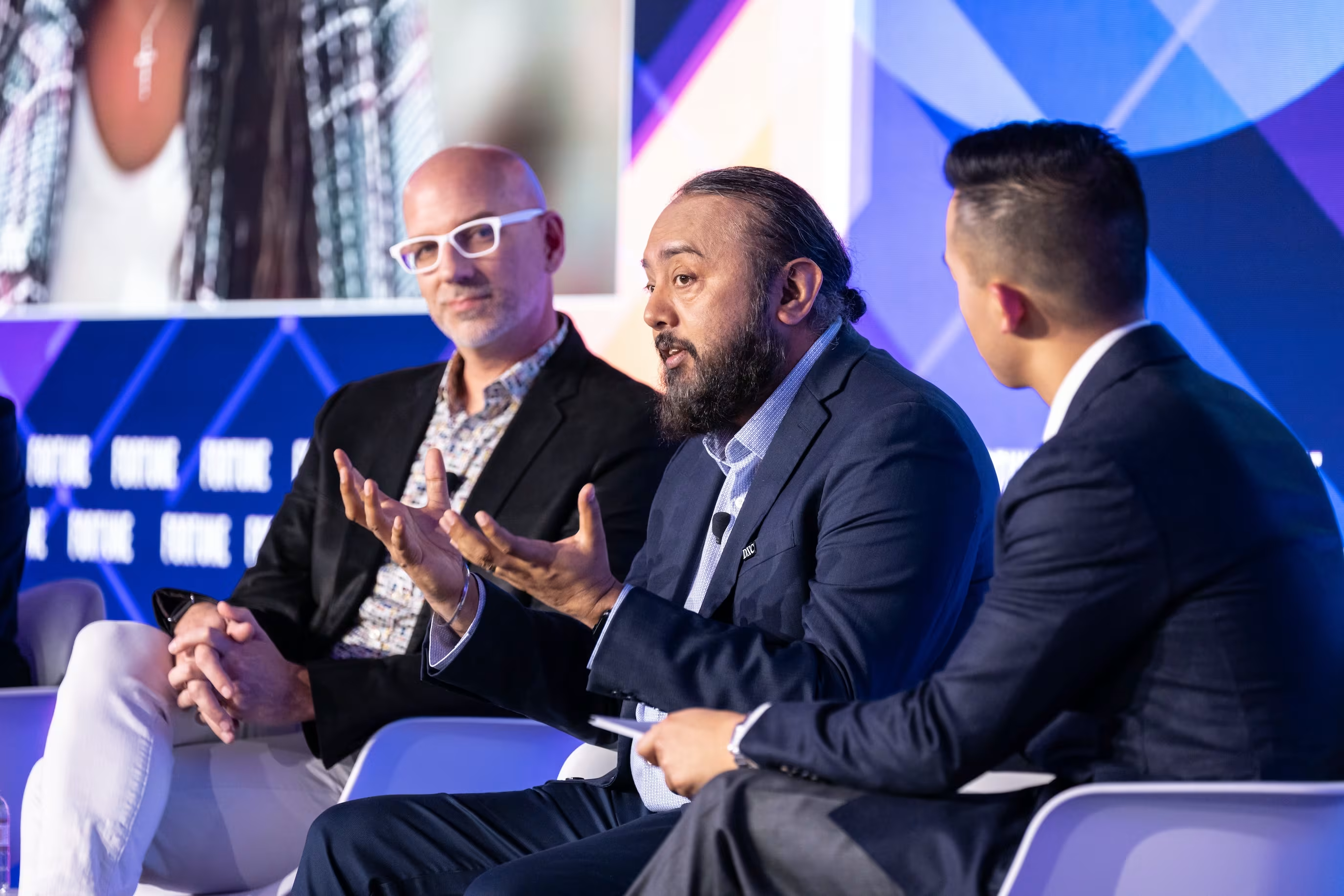
Gordon Ching, our founder, opened the event with a provocation: "we have moved from letting a thousand flowers bloom to cherry-picking." He described the shift as a transition from wide-ranging experiments with AI in the first half of 2026 towards a more selective focus on where AI actually creates business impact in the second half of 2026 as variable costs tied to AI tokens grow. The C-suite, he explained, is finally seeing what design leaders have known for a while: AI produces motion, but motion is not the same as business impact or customer value. Without a disciplined approach to AI usage in our teams, that motion generates noise, rather than ROI.
The floor has risen. Anyone can now build with AI. That raises the harder question for design and research leaders: how does the ceiling rise with it? As technology commodifies traditional capabilities, what new ones emerge, and what new business value do they create?
Panel 1 examined that question from the research side. Read on to explore what the researcher's role becomes as AI-driven engineering velocity reshapes product development, and how it amplifies what engineering can now deliver.
Panelists:
- Issa Breibish, Chief Design Officer, Bentley Systems
- Mary Piontkowski, VP of Product Design, Cisco Networking
- Lauren Madura, Director of Product Design, Dscout
- Moderated by Gordon Ching, Founder and CEO, Design Executive Council

Key themes surfaced:
AI has compressed the cost and time of synthesis, which forces the question of what researchers actually do. Four patterns surfaced across the conversation:
- From episodic studies to always-on programs. As markets change faster, researchers are moving from one-off projects to continuous signal capture.
- From reactive service work to proactive strategic contribution. Researchers are moving from answering the questions the organization asks to surfacing the ones it hasn't thought to ask yet.
- Researchers as enablers, not gatekeepers. With the right tools and guardrails, more people across the organization can run high-quality research, freeing specialists to move into leadership work.
- Researchers' human judgment becomes more consequential. When synthesis is cheap, what matters is the ability to interpret, frame, and make stakeholders feel what customers feel.
Q1: What is the human part of research when AI can handle synthesis at speed?
The panelists converged on a single answer: the researcher's contribution is shifting from doing the work to shaping what the work means.
Judgment baked into speed. Mary Piontkowski (Cisco Networking) described how the engineering organization at her company went fully agentic a quarter ago. Businesses are asking for more speed, and the harder question is how to move faster with effective judgment baked in. That, she argued, is what researchers bring: the strategic, systems-thinking work that decides which signals matter and helps teams act on them quickly.
Precision keeps speed from accelerating the wrong work. Issa Breibish (Bentley Systems) reframed the shift at the organizational level. His CEO at Bentley Systems has been asking the organization to move with "speed and precision." Most of it heard the speed half. Precision has been harder to translate. In an acquisition-heavy portfolio where customers exist across many products, precision is what keeps speed from accelerating the wrong work: building for the wrong user, solving the wrong problem, duplicating effort because no one holds a unified view of who is being served. Researchers, in his framing, are the ones who generate that clarity and carry it through the organization.
Clarity comes from immersion, not data volume. Lauren Madura (Dscout) brought the toolmaker's view. Her concern is that as AI handles more of the synthesis, researchers risk becoming purely mechanical operators of the tools: data in, data out, more of both, but no closer to the customer. The clarity that decisions require does not come from data volume alone. It comes from stakeholders being genuinely moved by what they are seeing. The researcher's job in this environment is to create experiences that let the rest of the organization feel what customers feel, not just see what they do. It is the kind of work Lauren says Dscout has long been proud of, through the video content and playlists it produces that resonate with stakeholders across the companies it serves.
We are not in an era of answers. We are in an era of questions. Just because we can build anything now doesn't mean we're building things that matter. Lauren Madura, Director of Product Design at Dscout
Q2: Do you think researchers are also becoming builders?
If prompt-based tools are making building accessible to non-engineers, what does that mean for researchers, who have always been positioned as the people who understand the user but hand off the making?
Researchers can now build with authority. Mary (Cisco Networking) believes that with democratized access to building tools, researchers can move from simply identifying insights to building prototypes. Their systems thinking, customer fluency, and strategic instincts, coupled with access to building tools, equip them to build with authority, not just advice. She is orienting her team at Cisco Networking in that direction. When a researcher can express an insight as a working prototype rather than a slide, the distance between understanding and shipping compresses.
The researchers’ systems thinking, customer fluency, and strategic instincts equip them to build with authority, not just advice. Mary Piontkowski, VP of Product Design at Cisco Networking
Builders are also becoming researchers. Lauren (Dscout) offered a mirror framing. As building tools become accessible to more of the organization, the question is not only whether researchers are becoming builders, but whether builders are becoming researchers. The specialist researcher's job shifts from being the person who does research to being the person who ensures research is done well across the organization.
Q3: What must change about research teams in the short term versus the long term?
In the short term, the panelists agreed, the work is cultural. AI can now handle a lot of the synthesis that has historically defined research work, and that shift raises real questions about professional identity for researchers whose value has been tied to that craft.
Making higher-altitude work visible. Mary's (Cisco Networking) approach has been to guide her team through the transition by making the higher-altitude work visible, so researchers can see what becomes possible when synthesis is no longer where their time goes.
Looking up from ingrained habits. Issa (Bentley Systems) is also guiding his team to look up from ingrained habits and recognize the new toolsets surrounding them. He encourages them to start actively surfacing what the organization does not know yet.
The opportunity is to move from waiting for problems to arrive, to actively triangulating data and surfacing what the organization hasn't yet seen. Issa Breibish, Chief Design Officer at Bentley Systems
Over a longer horizon, Lauren (Dscout) pointed to two structural shifts research teams should be preparing for:
- Build always-on programs. Borrowing a framing from Dscout CEO Michael Winnick, she pointed to moving from product-market fit to product-market flow. As markets change more rapidly, researchers should move from running episodic studies to running always-on programs that continuously pick up signals and help organizations adapt as things shift.
- Empower non-researchers to run high-quality research. She sees researchers moving towards more strategic work. When more people in the organization can run high-quality research independently, with guardrails built into the tools rather than heavy documentation and approval processes, non-researchers gain the ability to deeply understand business and customer needs, and research specialists are freed to address more strategic opportunities that enhance customer-centricity across the enterprise.
Researchers are positioned to thrive. Mary (Cisco Networking) sees the shift working in researchers' favor. Their strategic instincts, systems thinking, and customer fluency map directly to what enterprises will need most as engineering velocity accelerates.
Q4: What new responsibilities do researchers carry when they are designing for agents, not just humans?
Engineering is now asking for research. Mary (Cisco Networking) described a shift that vindicates something researchers have been pushing for years. Engineering teams at Cisco Networking started building agentic systems on their own, and within a single week, three different engineers came to her independently, asking for personas, top tasks, and use cases for the agents they were building. That is exactly the customer-centered discipline researchers have long tried to embed in how the organization builds. What changed is that engineering is now asking for it, not being asked to accept it.
Researchers as trainers of agentic systems. With agentic systems, she sees a second research role emerging. Agents are doing work customers have wanted to get done, which means they need to be trained on the same research fundamentals researchers already apply for human users. Once agentic experiences are designed and deployed, understanding how they behave over time becomes its own body of work, especially as agents start interacting with other agents. Studying how these systems play out in the wild, she noted, is where researchers become trainers.
The critical work ahead of researchers is to deeply understand the outputs of agentic systems, and learn how to become trainers that can better direct AI models. Mary Piontkowski, VP of Product Design at Cisco Networking
Her framing of researchers as trainers suggests the job is expanding to include continuous evaluation of AI model outputs, not just user behavior.
Building institutional context into agents. Issa (Bentley Systems) shared how his team is approaching this in a heavily engineering-oriented organization where knowledge tends to live in tribal pockets. They are building internal engineering agents that surface institutional context. They are also extracting capabilities from older interfaces and making them available agentically, giving customers new ways to derive value from products that would not otherwise be re-platformed.
Takeaways
The research panel points to a future where researchers are no longer the sole holders of research capability. Their role is to equip anyone who is building with the human context needed to build well. That shift asks researchers to become better at designing the toolkits and systems that let cross-functional teams make research-informed decisions on their own. It also gives them greater capacity to be strategic conduits of customer-centricity: rewiring how the organization understands the problems it is solving, and embedding quality into how their teams build rather than treating it as a stage of review.
--
If this article traces how researchers are evolving into agentic context builders, the companion piece traces the parallel shift on the design side: Raising the ceiling: Designers are stepping past contribution into end-to-end ownership of what ships.
For the broader context that expands on the three-day arc of executive conversations at Config 2026 that these panels sat inside, read the event recap: What's Next in Design and Research Leadership.